Content note: this page was written by Claude (AI) for Pensacola Locksmith.
Start with the lease before you touch a lock
The first thing to do when you lose a key or want a lock changed is read your lease. In most rentals the landlord owns the locks, and tenants are not allowed to swap or rekey them without written permission. Some leases require the landlord to rekey between tenants, and others say nothing at all. Knowing which category yours falls into saves you from a deposit dispute at the end of the year.
If the lease is silent, send the landlord or property manager a short message asking for permission, and keep a copy of the reply. Many landlords are happy for a tenant to pay for a rekey if it means fewer maintenance calls. Some will insist on using their own vendor. Either way, a written yes protects you and avoids arguments over who was allowed to do what.
A locksmith will ask for proof that you have the authority to authorize work on the door. For a rental, that means your lease or a note from the owner or manager. This is not a hurdle placed in your way. It is the same check that stops a stranger from having your own apartment lock changed. Have the paperwork ready when you call us.
What to do when you lose your key
Losing a key is stressful, but the first move is calm. Retrace your steps, check pockets and bags, and ask friends whether you left it somewhere. Decide whether the key is truly gone or just misplaced. If it was lost somewhere with your address or apartment number attached, such as a wallet or a backpack with your ID, treat it as a security problem and not just an inconvenience.
If you are locked out and no one has a spare, call the landlord or the building office first. They may have a master key and can let you in at no charge or for a small fee set by the lease. If they cannot be reached, call us and explain the situation. We will ask about the type of door and lock, and describe how entry is usually done without damage.
Once you are back inside, think about the lost key. If there is any chance a stranger found it, ask the landlord about rekeying the cylinder. A rekey makes the lost key useless, and it is usually a smaller job than most students expect. Cheap fixes like hiding a spare under a mat do not solve the problem, they make it worse.
Roommates, shared keys and who owns what
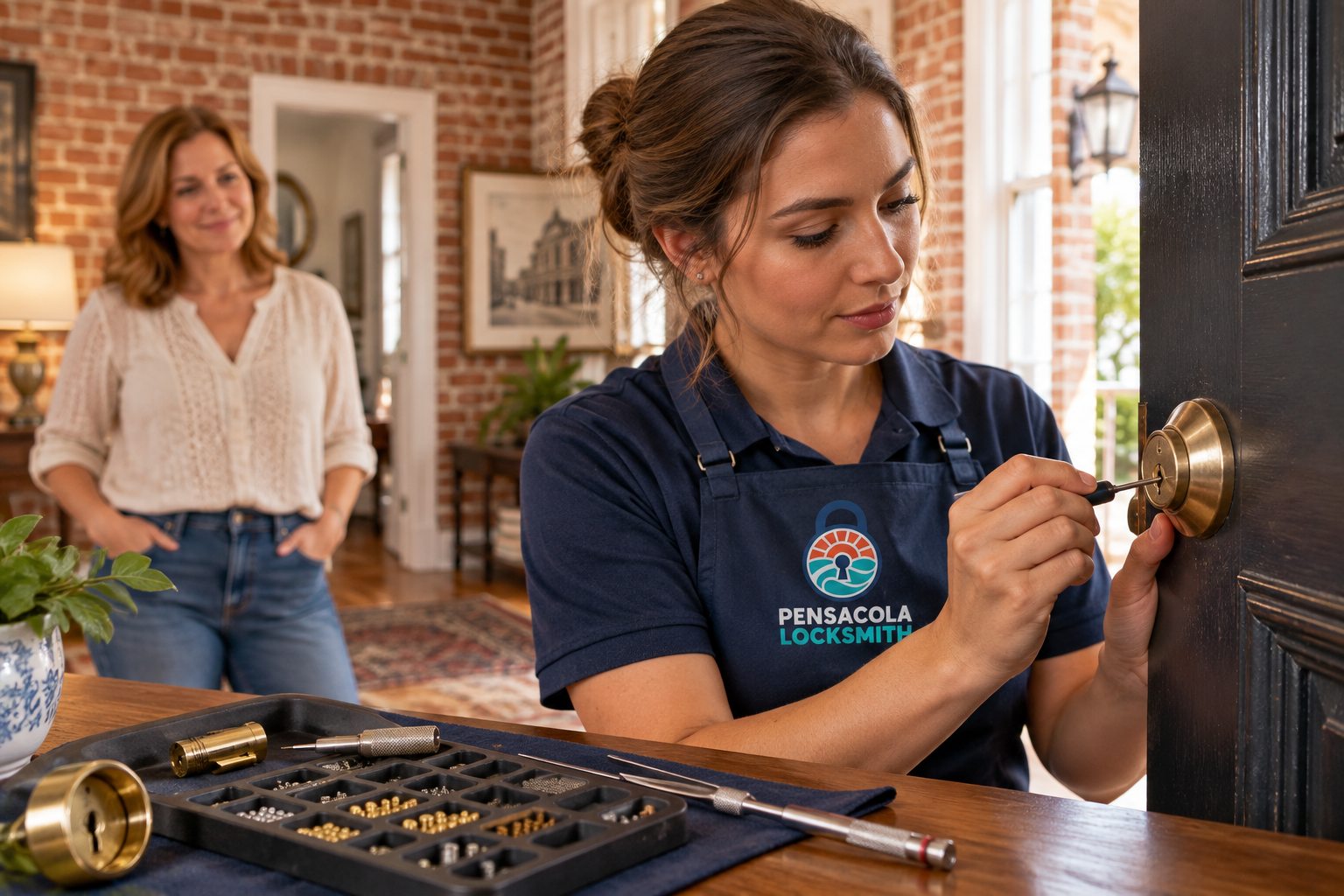
Shared housing creates a constant question of who holds a key. Before the semester starts, agree on how many copies exist and who has each one. Write it down in a group message so everyone sees it. When a roommate leaves, the copy should come back right then, not at the end of the month. It sounds picky, but it prevents the awkward moment of finding out an ex-roommate can still open the door.
Bedroom locks are a separate matter. Some leases allow a keyed lock on each bedroom, others forbid them for safety reasons because emergency responders must be able to get in. Ask the landlord before installing anything. A simple privacy latch inside may meet your needs, while a keyed deadbolt on a bedroom door often breaks the lease terms.
If a roommate moves out on bad terms or a relationship ends, a rekey is a reasonable request. Bring the issue to the landlord, and if they approve, a technician can change the cylinders in a short visit. You can then cut new keys only for the people living there now. It is a practical step that gives everyone in the unit peace of mind.
Dorm life and campus housing rules
On-campus housing usually follows its own rules. Residence halls often use card access or keys that the school controls, and students are not permitted to change or add locks. If you lose a dorm key or card, you report it to the housing office and they handle replacement. Do not try to pay an outside locksmith to do work in a building you do not control, because that can violate your housing agreement.
What students can control are their own belongings. A small lock for a locker, a bike lock, a cable lock for a laptop, and a safe box for passports or medications all matter in shared spaces. Pick locks that fit the thing you are protecting, and keep a record of any combination in a place that is not on the lock itself.
Parents often ask what to pack. A spare key for the family car, a note of which key does what, and a few labeled key tags are enough. Avoid putting the dorm room number or the student's name on a key ring that could be lost. If a key ring goes missing, anyone finding it should have no idea where the keys belong.
Car keys, lockouts and parking lot problems
Many students rely on an older car, and older cars still use mechanical keys. A mechanical key can be copied quickly, but a car with a chip inside the key needs programming as well as cutting. If you are not sure what kind of key you have, look for a plastic head, a button on the key, or a push-start ignition. Describe what you see when you call and we can explain what is involved.
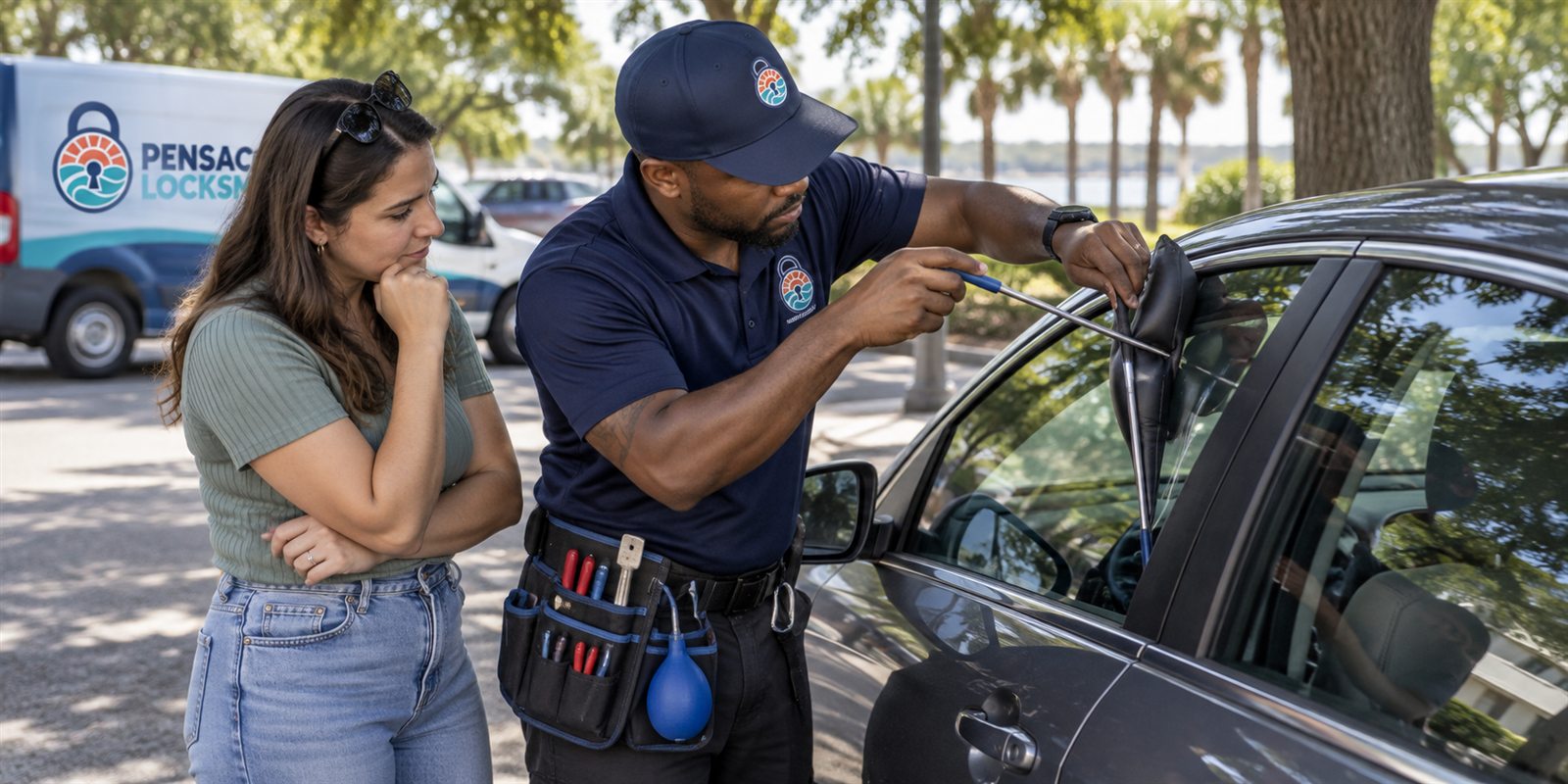
A car lockout in a campus lot or apartment parking area is common, especially after a late night. Stay with the vehicle if it is safe, keep your phone charged, and call for help rather than trying to force a door or window. Forcing entry can damage the weather seal, bend the door skin, or trip an alarm. A technician uses tools designed to open the door without harming it.
Ownership matters for vehicles too. A locksmith asks for identification and proof that the car belongs to you, such as registration or a title that matches your photo ID. If the car belongs to a parent, have them speak with us by phone or provide the paperwork. This rule protects every vehicle owner in the area, including you.
Bikes, scooters and the gear that gets stolen
Bikes and scooters are some of the most commonly stolen items near campuses. A flimsy cable lock gives little resistance to bolt cutters. A hardened U-lock or a thick chain through the frame and a fixed post makes theft far less appealing. The goal is not to be unbreakable, it is to be harder than the bike next to yours.
Lock the frame, not just a wheel. Quick-release wheels and seat posts can be removed in seconds, so secure them or take them with you. Use a well-lit rack and avoid leaving the bike in the same unprotected spot overnight. Salt air and humidity near the coast also corrode locks, so spray the mechanism occasionally with a lubricant meant for locks.
If a bike lock key is lost or the lock seizes, do not try to pry it open with a screwdriver. That often jams the lock further and can damage the bike. A locksmith may be able to open or replace the lock in a reasonable time. If the lock is cheap, it may make more sense to cut it off and buy a better one.
Safety habits that keep a student housing unit secure
Most break-ins at student housing happen because a door was left unlocked or a window was left open, not because someone defeated a lock. Make locking up a house rule. The last person out checks the door, and nobody props it open for deliveries or friends. Short habits, repeated daily, matter more than any hardware you can buy.
Be careful with spare keys. Hiding one under a flowerpot or doormat is the first place anyone looks. Instead, give a spare to a trusted friend or keep one with a family member. If you rent through the holidays or travel for summer, remove any personal notes and tell the landlord whether the unit will be vacant so the property is checked.
Look at the door itself. A door that does not latch properly, a deadbolt that only extends partway, or a frame with a cracked strike plate all weaken security. Report these to the landlord in writing. If the landlord does nothing, a technician can describe the problem and give you language for the repair request so it is clear and specific.
Subletting, summer breaks and handing keys to the next person
Many students sublet over the summer or hand an apartment to a friend. Before doing so, check that the lease allows it and that the landlord is aware. When the next person takes over, collect your copies of the key. If you cannot be sure how many copies exist, asking the landlord to rekey before the new person arrives is a sensible step for both of you.
Do not give out keys carelessly during a sublet. Meet the new occupant at the door, hand over the keys in person, and ask them to confirm each one works. If you are far away, a keypad lock or a lockbox can help, but only if the landlord permits it. Anything installed without permission can lead to losing your deposit.
When the lease ends, return every key you received, including the mailbox key and any gate or pool fob. Take a photo of the door and the keys as evidence. Missing keys are a common reason for deposit deductions, and a clear record of what you returned is the simplest way to protect yourself.
Hurricane season, evacuation and leaving town
Students from out of state sometimes forget that Pensacola sits on the Gulf and storm season is part of life here. If an evacuation is called, you may leave quickly and be gone for days. Before you go, lock every door and window, take your car keys and important documents with you, and photograph the condition of the unit so you have a record if something happens.
After a storm, test your lock before relying on it. Humidity, water and debris can make a cylinder stick, and a swollen door may refuse to latch. If a key feels stiff, do not force it. Spray a small amount of lock lubricant into the keyway, work the key gently, and call for help if it still binds.
If your housing is damaged, notify the landlord immediately and ask about repairs to the doors and locks. A door that no longer latches is a security risk and a safety problem. A technician can describe what the repair involves, such as replacing a strike plate or realigning a latch, and a quote is given by phone.
Storage units, mailboxes and the small locks students overlook
Beyond the apartment door, students carry a handful of small locks that cause surprising trouble. A storage unit padlock, a mailbox key, a locker at the gym, a bike chain and a toolbox lock each have their own key or combination. Make a simple list of what you own and where each key lives. When something goes missing, you will know exactly which lock is affected and what needs replacing.
Mailbox keys deserve extra care because mail often carries bank letters, tax forms and cards. If you lose a mailbox key, tell the property office or the postal service right away. They control that lock, and they will explain the process for a replacement. Do not leave a note on the box or share a key with someone you barely know, even a friendly neighbor.
Combination locks are convenient because nothing can be lost, but combinations get forgotten. Store yours in a place that is not on your phone lock screen or taped to the lock. If you forget a combination on a locker you own, a technician may be able to help open it. For shared or school-owned lockers, contact the office that manages them first.
Parents, guarantors and who can authorize a lock change
Many students rent with a parent or guardian acting as guarantor or co-signer. That arrangement helps with the lease, but it does not automatically give the parent authority to order work on the unit. The person authorizing a lock change must be a tenant or the owner, or have a written note from the owner or manager. A technician will ask for this before starting.
If a parent is paying for a lockout or rekey from another city, the simplest approach is to have the student present with a photo ID and the lease. The parent can speak with us by phone to discuss the quote and the payment arrangement. This keeps the ownership check clean and avoids delays on arrival.
Keep this in mind also for vehicles. If a parent holds the title but the student drives the car, bring the registration and a note or call from the owner. The check is the same as any vehicle job: the locksmith confirms the car belongs to the person asking, or that the owner has agreed in a way that can be verified.
How to talk to a locksmith when you are in a hurry
When you call, tell us where you are, what kind of door or vehicle it is, and what has happened. Mention whether anyone else has a key and whether you have the right to authorize the work. This lets the technician plan the right tools and decide whether the job is simple or complicated.
Expect a few questions about ownership or authority. Have a photo ID and a lease or vehicle registration ready. A quote is given by phone, and if the problem needs a technician to look at it in person, the service call charge is explained before dispatch. Call to confirm availability, since timing depends on the day and the job.
After the work, ask the technician to show you how everything works and to test every key. Keep a spare in a safe place. Share costs with roommates fairly and keep receipts. A short, clear record of what was done helps if the landlord or a parent later asks about it.
Common questions
Can I change the locks on my rental apartment as a student?
Only with permission. Most leases give the landlord control of the locks, and changing them without approval can cost you your deposit. Ask the landlord in writing. A locksmith will also ask for your lease or owner approval before doing any work on the door.
What if I lose my dorm key or card?
Report it to the housing office. Residence halls control their own locks and access systems, and they handle replacement. An outside locksmith generally should not work on campus housing, so contact the school first and follow their process.
Can a locksmith help if I am locked out of my car at night?
Call us to confirm availability. Stay in a safe, well-lit place, and have your photo ID and proof that the vehicle is yours ready. A technician uses tools meant to open the door without damage, and a quote is given by phone.
My roommate moved out and still has a key. What should I do?
Ask the landlord to approve a rekey. Once approved, a technician can change the cylinders so the old key no longer works, and you can cut new keys only for current residents. It is a simple way to close the gap without any confrontation.
Do parents need to be involved in the call?
If a parent owns the car or signed the lease, we need proof of authority, and that can be done by phone or with paperwork. Students living on their own can authorize work on their own lease or vehicle with a valid ID and the right documents.