Content note: this page was written by Claude (AI) for Pensacola Locksmith.
Why student housing needs more key attention
In a house shared by four students, the number of keys is rarely what anyone thinks it is. One roommate gives a copy to a boyfriend, another leaves one with a parent, a third loses a set and has a duplicate made at a hardware counter. By the end of a lease, nobody can say who holds a working key. Multiply this by a street of rentals, and key control quietly becomes a common weakness.
Roommate changes make it worse. When a tenant moves out mid-lease and someone new moves in, the departing tenant's key still works unless the lock is rekeyed. This is not about suspecting anyone. It is simply how locks function: they recognize a key by its cuts, not by who is holding it. The safest and easiest fix is to rekey the lock whenever the household changes.
For tenants, the question to ask is whether you are allowed to do this. Leases differ, and some require the landlord's approval or a spare key for the landlord. Ask first, and keep the answer in writing. A locksmith can do the work quickly once the permissions are clear, and will confirm your authority before starting.
Rekeying between tenants: what a landlord should know
Rekeying is the standard turnover task for a landlord with rental units. The technician removes each lock cylinder, replaces the internal pins to match a new key, and reassembles it. The lock hardware stays in place, so the units look unchanged, but every earlier key is now useless. Done well, it takes a short time per door, and a single visit can cover the front door, back door and any interior locks.
Landlords with several units benefit from planning. Keying all exterior doors in one unit alike means a tenant carries one key rather than a ring of three. Keying multiple units to a common master lets the landlord or property manager carry a single key that opens everything, while each tenant's key opens only their own unit. This reduces lockouts and the number of loose keys that can go astray.
Record keeping matters more than the hardware. Note which units were rekeyed, when, and how many keys were issued. If the landlord retains a key, label it clearly and store it in a secure place. A landlord needs to prove ownership or management authority before the locksmith rekeys anything, so keep a copy of the deed, a management agreement or a similar document nearby.
Lockouts for students and young renters
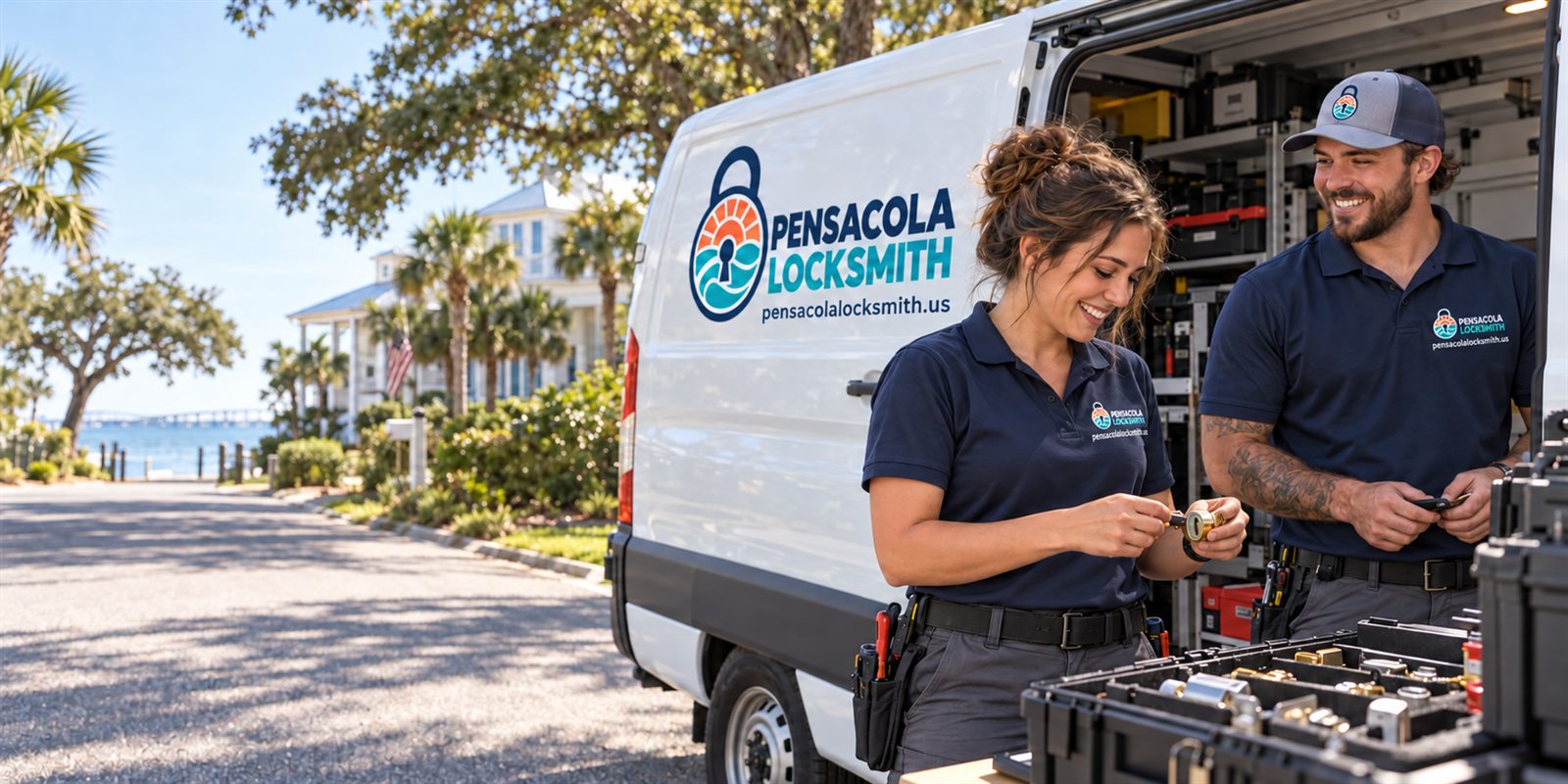
Late nights, early classes and busy schedules make lockouts common. Someone steps out to take out trash and the door latches behind them. A key is left in a backpack in a classroom. A roommate has the only copy and is on the other side of town. These are ordinary problems, and a mobile locksmith can usually solve them without damaging the door.
The first step is to confirm you live there. That might be a lease, a student ID with a matching address, a utility bill, or a message from the landlord. Locksmiths ask this of everyone, because a stranger claiming to be locked out of someone else's apartment is exactly the situation the check is meant to catch. If you cannot show anything, explain, and we will say what is possible.
Before calling, check the simple things. Is a window or a sliding door unlocked? Does the landlord or property manager have a key and is able to help? Does a roommate have a key nearby? A call to the landlord can be quicker, though some leases make the tenant responsible for the cost of an after-hours lockout. If those options fail, call us, describe the lock, and we will talk you through the next step.
Apartment doors and what a locksmith can change
Apartment buildings often have standardized hardware: a knob lock with a deadbolt above it, a peephole, and a chain. The deadbolt provides the real security, and the quality varies. A deadbolt with a short bolt, a loose strike plate or a thin door can be forced, even though the lock itself is fine. The weakness is often the strike, not the key.
A simple upgrade is replacing the short screws in the strike plate with longer ones that reach the wall framing. This takes minutes and improves resistance to being kicked in. Another is adding a door reinforcement plate around the lock area. Neither requires a new lock, and neither alters the look of the door. A locksmith can examine the setup and tell you what is worth doing.
Remember that in a rental, you may not be permitted to alter the door at all. A quiet fix may be allowed while a visible change is not. Ask the landlord before any work, and if they refuse, there are renter-friendly measures, such as a portable door brace or a window bar, that do not alter the hardware. A good technician will tell you which options respect your lease.
Bicycles, storage rooms and shared spaces
Students and young residents often keep bikes, boards and gear in shared storage, a porch or a hallway. These are targets because they are valuable and easy to move. A bike locked with a thin cable is hardly locked at all. A sturdy lock, used to secure the frame and wheel to an immovable object, is far better. A locksmith may advise on what suits your situation, though most heavy bike locks are bought rather than installed.
Shared storage rooms present their own question of who holds the key. If one lock serves a whole building, the key list is long and uncontrolled. Rekeying that lock when tenants change, or switching to individual padlocks for each resident, can reduce risk. The landlord should be involved, since a shared space is their property and they decide how it is managed.
Mailbox locks are another overlooked item. A tenant moves out and the mailbox key stays with them, or a mailbox lock jams because of humidity and salt air. Mailbox locks are often a postal or building matter, so check who is responsible before calling. We can help with building-owned mailbox locks where the owner authorizes the work, and we will confirm authority first.
Cars on and around campus
Many students drive older vehicles, and older vehicles bring their own lock issues. Worn ignition cylinders, door locks that stick, and keys that have been copied from copies are common. A key that has been duplicated several times drifts from the original cuts and can start to bind. Having a fresh key cut from the original code, or a properly cut replacement, often fixes a car that seems to be failing in other ways.
Newer vehicles use transponder keys or proximity fobs. If a key is lost, it needs to be made and programmed to the car, which needs proof of ownership. A car titled to a parent complicates matters, since the person asking may not be the owner. In that case, the owner's authorization and documents are needed, and the locksmith will explain what is required before starting.
Lockouts happen in parking lots at all hours. Tell us where the car is, what type of key it uses, and whether you can show registration and ID. We will say what we can do and whether availability fits your timing. Please call us to confirm, since we cannot promise a specific arrival time. If someone or something is trapped in the car, contact emergency services first.
Smart locks and keypads for rentals
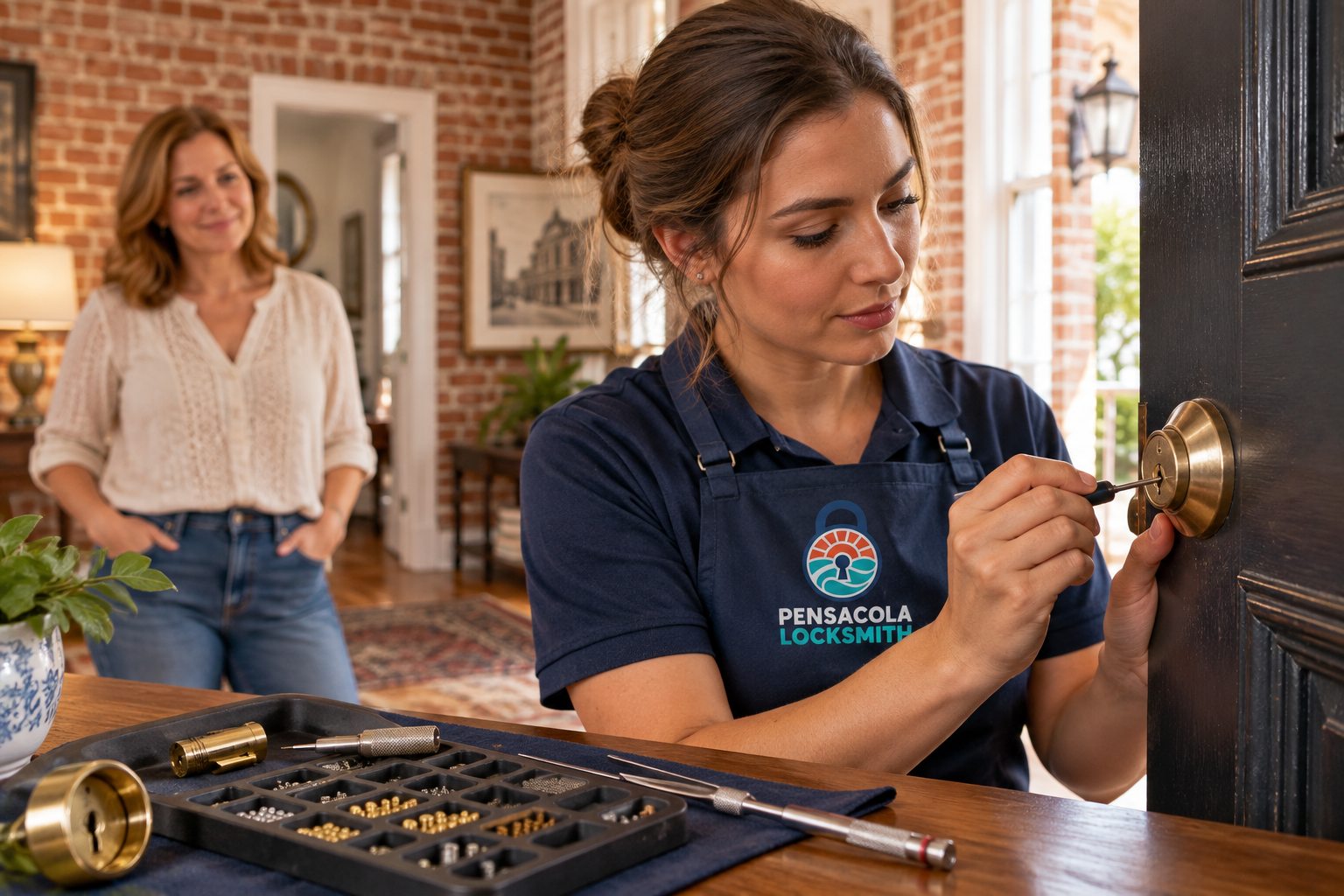
Landlords increasingly consider keypad deadbolts and smart locks for rental units. The appeal is clear: no physical key to lose, a unique code for each tenant, and the ability to change the code between leases without touching the lock cylinder. For short-term or furnished rentals, the convenience can be considerable, and many landlords like the control of being able to delete a code remotely.
There are tradeoffs to weigh. Batteries die, and a dead keypad on a Sunday night is a lockout of its own. Software can fail, and some units depend on a phone app that the tenant may not want. Codes get shared, and if the tenant gives a code to ten friends, the benefit of unique credentials is lost. Choose a model with a mechanical key backup and a low-battery warning.
Installation matters as much as the model. A keypad lock fitted to a door that is out of alignment will bind and wear quickly. A technician checks that the door closes squarely, that the bolt extends cleanly into the strike, and that the lock is set up with the codes you need. Humidity and salt air also affect electronics, so choose hardware designed to cope with that environment.
Keeping a clear record as a landlord
Good key control is a record as much as a lock. Keep a simple log: each unit, each lock, the date it was last rekeyed, the number of keys issued, and who received them. When a tenant moves out, record which keys came back. This log protects you if there is ever a dispute about access, and it makes turnover faster because you know exactly what to do.
Avoid stamping unit numbers or addresses on key tags. A lost key with a label becomes a map to a door. Use a code or number that only you can decode. When you give a key to a contractor or cleaner, note it, and ask for it back. If a key is not returned, rekeying is the cleanest answer, and it is a small job compared with the risk of leaving a lock unchanged.
If you are an out-of-area owner, working with a property manager, make sure the manager can authorize locksmith work and that you have given them written permission. The technician will want proof of authority before opening or rekeying. Having documents ready, such as a management agreement or deed, avoids delays and keeps the process honest for everyone.
Weather, humidity and wear in campus-area rentals
The Gulf Coast climate is tough on door hardware. High humidity, rain and salt in the air corrode metal, swell wooden doors, and stiffen lock mechanisms. Rental units with heavy turnover and little maintenance feel this most. A door that sticks in summer may fit fine in winter, and a lock that turns hard may simply need cleaning and the right lubricant rather than replacement.
A landlord can reduce calls by doing a quick check between tenants. Test every key in every lock. Look at the strike plate and bolt alignment. Make sure the deadbolt throws fully and the door closes without being slammed. Replace any lock that is worn or inconsistent, since a lock that works most of the time will fail when it matters.
Hurricane season is a good reminder to check the doors after a storm. Wind and water can shift frames, and a door that was fine before may bind or leave a gap. If a tenant reports that a lock is difficult after a storm, treat it as a maintenance item. We can look at it, and if the job is complicated, a technician visits and the service call charge is explained before dispatch.
How to arrange service
Call us and describe what you need: a lockout, a rekey, a lock repair, a key replacement. Tell us whether you are a tenant or an owner, and what type of property it is. For a simple job, we give a quote by phone. For a larger one, such as rekeying a whole building, a technician may visit first so the work can be planned correctly.
We cannot promise an arrival time, so call to confirm availability, particularly around the start and end of terms when many tenants move at once. If you can offer flexibility on timing, say so. If you are a landlord scheduling several units, tell us how many doors, and what hardware you have, so the technician brings the right parts.
On site, expect the technician to ask for proof of residence or ownership before starting. Test all keys before the technician leaves, and keep a record of what was done. Good habits at the beginning of a lease prevent most problems later, and a short conversation with a locksmith can give you a plan that suits your property and your budget of time.
Move-in and move-out weeks
The start and end of each term compress many moves into a few days. Keys are handed over in a hurry, boxes block doors, and nobody has time to test anything. This is when mistakes are made: a key that does not work is noticed late, a lock that was supposed to be changed is forgotten, or a door is left unlocked while a truck is loaded. Planning even a little reduces the stress.
Tenants moving in should test every key at the door before the first box goes inside. If a key sticks or turns hard, tell the landlord at once so the problem is documented as pre-existing. Tenants moving out should return every key, photograph the locks, and avoid leaving doors unlatched during loading. A propped door is an open invitation, and a few minutes of attention prevents losses.
Landlords can lighten the rush by scheduling rekeying on the day between tenants rather than leaving it until the last moment. Booking ahead for a batch of units is more practical than a string of single calls. Tell us how many doors there are and what hardware is on them, call to confirm availability, and the work can be planned around your turnover calendar.
Common questions
Can a tenant rekey the locks in a rental near campus?
It depends on the lease. Many leases allow rekeying if the landlord keeps a key, and some prohibit changes without written permission. Check first and keep the answer in writing. The locksmith will confirm your authority before starting any work.
Why should a landlord rekey between tenants?
Because old keys keep working until the lock is changed. Rekeying alters the internal pins so previous keys no longer operate the lock, without replacing the hardware. It is a basic form of key control and is often done in one short visit.
What do I need to show for a lockout at my apartment?
Usually a photo ID matching the address, a lease, or a utility bill or letter with your name. The locksmith confirms you live there before opening the door. Explain your situation on the phone if you cannot show anything right away.
Are keypad locks a good idea for student rentals?
They can be, since codes can be changed between tenants without a new key. The downsides are batteries, shared codes and software problems. Choose a model with a mechanical key backup, and have the door aligned properly during installation.
Can you help if my car key is lost and the car is in a parent's name?
Possibly, but we check ownership before making or programming a key. If the car is titled to someone else, the owner's authorization and documents will be needed. Call us, describe the vehicle and the situation, and we will explain what is required.