
Content note: this page was written by Claude (AI) for Pensacola Locksmith.
A mixed area means mixed doors
In a neighborhood where houses sit near shopping and services, a locksmith can be asked to work on very different doors in the same day. A residential entry with a standard deadbolt, a shop door with a commercial cylinder, a side office with a keypad and a garage entry for a home business all have different needs. Knowing which category your door belongs to helps us prepare.
Residential doors usually use bored locks in two round holes, with a deadbolt above a knob or lever. Commercial doors may use heavier cylindrical or mortise locks, rim cylinders on glass doors or exit devices with bars. Some buildings combine both, such as a house converted for office use, with a front door that looks residential but must meet business expectations for access control and exit.
When you call, tell us what the door is used for, who uses it and how often. A door that serves a family of four behaves differently from one that serves forty customers a day. That context shapes advice on hardware grade, finish and maintenance. It also helps us tell you honestly when a lighter option will do the job and when a heavier-duty one is worth the added effort.
A quick way to describe your door over the phone is to say how many holes you can see in the edge and face. One round hole for a knob and one above for a deadbolt is the common pattern for houses. A glass door with a small cylinder on the side or a long bar across the inside points to commercial hardware. Photographs, if you can send them, are even better and save the technician guesswork.
Neighborhood homes: the everyday jobs
Most residential calls are not dramatic. A key that has started to stick, a deadbolt that needs a lean to close, a front door lock that someone wants matched to the back door, or a rekey after a move. These everyday jobs make up the bulk of what a mobile locksmith does, and they reward a calm, thorough approach more than any special trick.
A good habit is to treat the locks on your house as a set. If you replace the front door lock but leave the back door and garage entry on old keys, you now manage several keys for a single house. Matching them so one key works everywhere, where the hardware allows, simplifies life and reduces the chances of being locked out through a door you rarely use.
Ask the technician to check the strike plates and hinges while on site. Quite often a sluggish lock turns out to be a door that has moved, and a quick adjustment returns the feel without replacing anything. If a part must be replaced, you will hear why. A neighbor-like conversation about what is wrong and what are the choices is how we like these visits to go.
Do not ignore small warning signs. A key that needs jiggling, a lock that works only when the door is lifted and a latch that sometimes fails to catch are all early signals. Dealing with them during a calm afternoon is easier on everyone than scrambling when the lock finally refuses in the middle of a rainy morning. A short visit now usually prevents a lockout later.
Retail and service doors nearby
Businesses near a busy shopping area deal with constant coming and going. Front doors open from early morning through evening, closers and latches take heavy use, and staff change over regularly. Hardware wears faster, and key control becomes more important than for a household. A small shop can easily lose track of how many keys exist after a few seasons of employee changes.
A rekey of the main entry and the stock room after staff turnover is a practical, modest step. Many owners also keep a simple log of keys issued and returned. For shops with many employees, keypad locks on staff doors allow individual codes, which can be removed when someone leaves. We help you weigh the tradeoffs between convenience and the work of maintaining codes.
Remember that a business door has to work for customers, too. A lock that is hard to operate, a closer that slams or a threshold that traps feet creates liability and irritation. A technician looks at the whole door, not only the lock, and will mention anything that looks like a problem. Before any rekey or lock change, we check that the person asking is the owner, manager or tenant of the premises.
Delivery and customer traffic can create odd habits, like propping the door or leaving it unlatched. If you notice staff doing this, ask why. Sometimes the closer is too strong or the latch is stiff, and a simple adjustment removes the reason for the workaround. A door that is easy to use is more likely to be used correctly, which supports both safety and security.
Home offices, converted buildings and doors that serve two purposes
Many people work from home or run a small business from a converted space, and those doors serve two purposes. A client entrance might also be your family's side door, or an office may share a wall with your living room. Security needs differ across the building, and a single key for everything is rarely the best plan.
A thoughtful approach separates the zones. The business door gets its own key and perhaps a different lock grade, while the house remains on its own key. If a client or employee needs access, they receive a key or code for the office only. That way, if something is lost, the damage is contained. Rekeying one zone does not disturb the other.
Think about paperwork, equipment and valuables. A cabinet lock on a file drawer, a deadbolt on a storage room and a solid door between the office and the rest of the home are modest measures that protect sensitive items. A technician can look at the layout and suggest the simplest set of changes. Often the recommendation is smaller than owners expect, and that is a good outcome.
Do not forget the alarm or camera side if you have one. A locksmith does not install alarm systems, but we can make sure doors and frames are sound enough that sensors sit on a stable surface and contacts line up. A door that rattles or flexes can trigger false alarms, and fixing the door often fixes the alarm complaint. Coordinate with your alarm provider where needed.
Garages, side gates and the other entries
People tend to lock the front door well and forget the other ways in. The garage entry door, the side gate, the back slider and the shed behind the house often have the lightest locks. In a neighborhood with regular foot and car traffic, these secondary entries are where problems start. Improving them is usually inexpensive compared with the risk they carry.
Garage doors themselves have mechanisms that deserve attention. Overhead doors often have a manual release that can be reached through gaps if not shielded, and an opener's remote can be forgotten in a parked car. Locking the interior door between garage and house, and keeping remotes out of sight, are simple precautions. A technician can advise on the lock side, while door and opener specialists handle the mechanics.
Gate latches and padlocks near moisture will corrode, so check them every season. Replace rusted padlocks before they seize, and consider a latch that cannot be lifted from the outside with a stick or a wire. If you use a combination or keypad lock on a gate, change the code occasionally and whenever someone who knew it no longer needs access.
If you rent your home, check the lease before changing any lock. Many landlords require approval, and some keep a key themselves. A tenant who rekeys without permission may end up in a dispute. If the landlord agrees in writing, we can do the work, and the landlord can authorize it directly if they prefer. Clear permission makes the job simple and avoids awkward conversations later.
Lockouts: what to try and what to avoid
Lockouts in a neighborhood have a certain pattern: someone steps out for the mail, the door locks behind them, or a key breaks in a lock during a rushed morning. Before calling, check whether any other door or window is unlocked, and whether a family member, neighbor or coworker has a spare. Do not climb or force anything, as a fall or a broken window creates a larger problem.
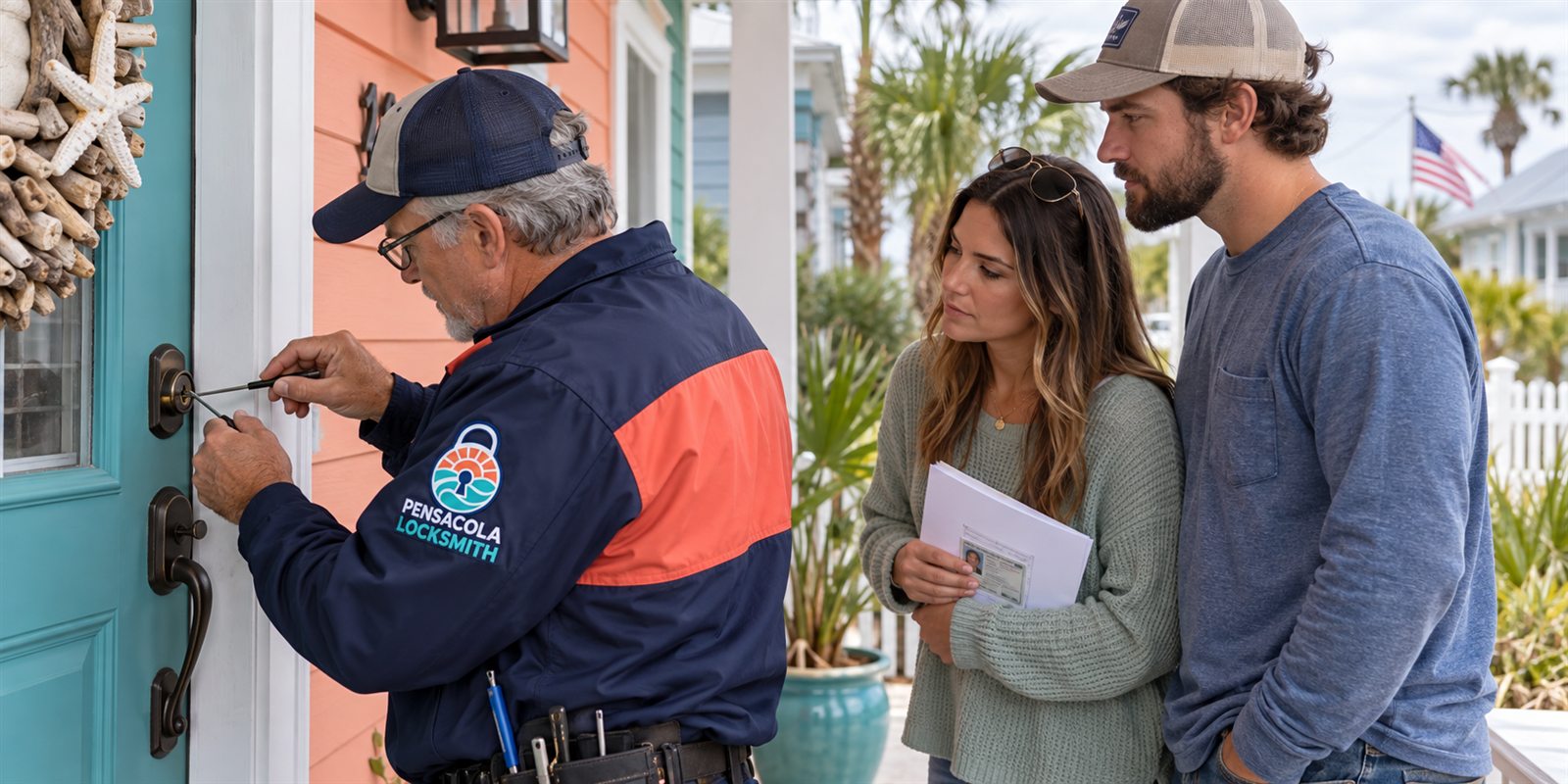
When you call, describe the door, the lock and what happened. We ask for proof of residence or authority before opening, such as identification matching the address. For a business, we ask for evidence that you own, manage or lease the place. For a vehicle, we check ownership through registration or other documents. These steps are part of every opening, and they protect you.
We try to open doors without damage where we can, and we explain any other option before using it. We cannot promise arrival times because they depend on conditions and demand. Please call to confirm availability for your area. If the door cannot be opened non-destructively, we will tell you what repair or replacement would follow before it happens, so you can decide.
Humidity also affects electronic locks and remotes. Batteries drain faster in heat, and moisture can creep into a keypad. If you use a smart lock, check batteries on a schedule, such as when you change smoke detector batteries. Keep a mechanical key as a backup, hidden safely away from the door. A little routine prevents the awkward situation of standing outside with a dead keypad.
Weather, humidity and hurricane season
The Gulf Coast climate is warm and damp, and locks feel it. Wooden doors expand, metal parts corrode and keyways collect dust and moisture. A light, regular routine makes a difference: wipe exterior hardware, apply a dry lubricant to the keyway, and check that doors close without rubbing. These small habits can extend the life of locks by years.
Hurricane season brings extra considerations. Doors face high wind and sometimes flying debris, so frames, hinges and strike plates matter. Long screws that reach framing give hinges and strikes a solid anchor. Before a storm, think about where your keys are and who can reach your home afterward. After a storm, doors may swell or shift, and a technician can often restore them.
We do not promise storm-time availability, and it would be dishonest to do so. Conditions change and many people need help at once. The best protection is preparation: tightening hardware, storing spare keys sensibly and photographing your doors and locks beforehand. If you need help afterward, call us and we will tell you what is possible for your area.
One more habit is worth mentioning: a walk-through every season. Look at each door, turn each lock, check each key and glance at hinges and strikes. It takes ten minutes and often finds something minor before it grows. Neighbors who do this tend to call a locksmith for planned work rather than for emergencies, which is better for everyone involved.
Keys, copies and sensible habits
Keys are small, but they hold a lot of trust. Every copy you make is a decision to give someone access, even if only to yourself in a different pocket. Make copies from an original, not a worn copy, and test each one in the lock. A key that works poorly in the shop will work worse in a damp doorway.
Mark keys in a way that does not reveal what they open. A tag with your address, if lost, tells a stranger where to try it. Use a code or color instead, and keep a private list at home. If a key is lost near your home, consider a rekey rather than waiting and wondering. The cost of a rekey is modest compared with the uncertainty.
For families, agree on a plan for spare keys. Hiding one under a mat or a pot is easy to guess, so use a small lockbox or give a key to a trusted neighbor. For businesses, a locked key cabinet with a log of who takes what keeps order. These tiny routines are dull, but they quietly prevent many of the calls locksmiths receive.
We know that calling a stranger to your door is not a small thing. That is why we explain what we are doing and why, and why we ask the questions we ask. If at any point you are uncomfortable, say so. A good locksmith welcomes questions, and the work should always make you feel more secure in your home or business, not less.
What to expect when you contact us
You call, describe the job and answer a few questions. We give you a quote by phone before a technician is dispatched, so you know where you stand. If the work is more complicated than it first sounds, such as several doors or unusual hardware, a technician visits to assess it, and the service call charge is explained before dispatch.
When the technician arrives, they confirm your authority at the property, look at the door and explain what they find. They tell you the options and the tradeoffs in plain language. You choose what to do, and they carry it out, then test the result with you. We would rather spend a few extra minutes explaining than leave you unsure what was done.
Keep the receipts or notes, and record which doors were changed and when. If anything feels off in the following days, call us. A lock should work smoothly, and if it does not, we want to know. Good service continues after the technician leaves, and it is the way we hope to earn a call from your neighbors when they need a locksmith.
Common questions
Do you serve both homes and shops in Cordova Park?
Yes. The area mixes neighborhood houses with nearby retail and some buildings that are both. Tell us what the door is used for and who uses it, and we will confirm availability for your location and quote by phone before sending anyone.
Should I rekey after an employee leaves?
If that employee held a key to a door you want to keep controlled, rekeying is a sensible, modest step. We check that you are the owner, manager or tenant first. Keypad locks are another option because codes can be removed without changing keys.
Can I use one key for my house and home office?
You can, but separating them is often wiser. A client or employee with an office key then cannot enter the house. A technician can set the office door on its own key and keep the house on another, rekeying one zone without disturbing the other.
What do I do if I am locked out?
Check other doors, windows and spare keys without forcing anything, then call us. Describe the door and the lock. We confirm ownership or authority before opening, and we cannot promise arrival times, so please call to confirm availability for your area.
How are prices given?
By phone, after you describe the job. If the job is complicated, a technician visits to assess it and the service call charge is explained before dispatch. You decide whether to go ahead once you know what to expect.