
Content note: this page was written by Claude (AI) for Pensacola Locksmith.
What locksmith work looks like in a rural community
Locksmith work in a town like Molino is different from work in a dense neighborhood. Properties are larger, the buildings are more varied, and a single address may have a house, a detached garage, a workshop, a storage shed and a gate at the road. Each of those can have its own lock, bought at a different time from a different maker. When someone calls, the first job is to understand which of those locks is the problem and what the person actually needs, whether that is getting inside, replacing something worn out or simply making the whole property work off fewer keys.
Because of that variety, a technician arrives expecting to adapt. A rural call can start as a simple house lockout and turn into a conversation about the padlock on the shop door that nobody has the key to. Mobile service suits this well, since the tools, cylinders, blank keys and hardware travel in the vehicle and most of the work happens on the spot, on the porch or at the gate, instead of being sent away somewhere and waiting for parts.
It also helps to be honest about distance. Molino is not a short hop from every part of the service area, and a call to a remote address takes planning. Please call us to talk through the situation and to confirm availability for your location. Quotes are given by phone, and if the job is more involved than it sounds, a technician visits first and the service call charge is explained before anyone is dispatched.
Long driveways and how to help a technician find you
Anyone who lives on a long private drive knows that navigation apps and delivery drivers regularly get it wrong. The same is true for a locksmith. Rural addresses can be shared by several properties, mailboxes may sit a long way from the house, and a gate or a turn-off may not be visible from the road. When you call, give plain landmarks along with the address: the color of the mailbox, which side of the road the drive is on, whether there is a cattle guard or a gate, and what the house looks like from the road.
If the property has a gate, tell the technician how it opens. Some are chained and padlocked, some have a keypad, some are operated by a remote or a phone app, and some are simply latched. If the gate is the thing that is locked and you are stuck on the wrong side, say so plainly, because the work starts there and not at the house. In the evening, switching on a porch light or an outside light at the end of the drive helps more than most people expect.
It is also worth thinking about where you will be waiting. If you are locked out and waiting in a car or on the porch, stay somewhere safe and visible, and have your phone with you. If dogs or livestock are loose on the property, mention it when you call so the technician can plan the approach and nobody is surprised at the gate. A little preparation here saves time and avoids confusion.
Barns, workshops and outbuildings
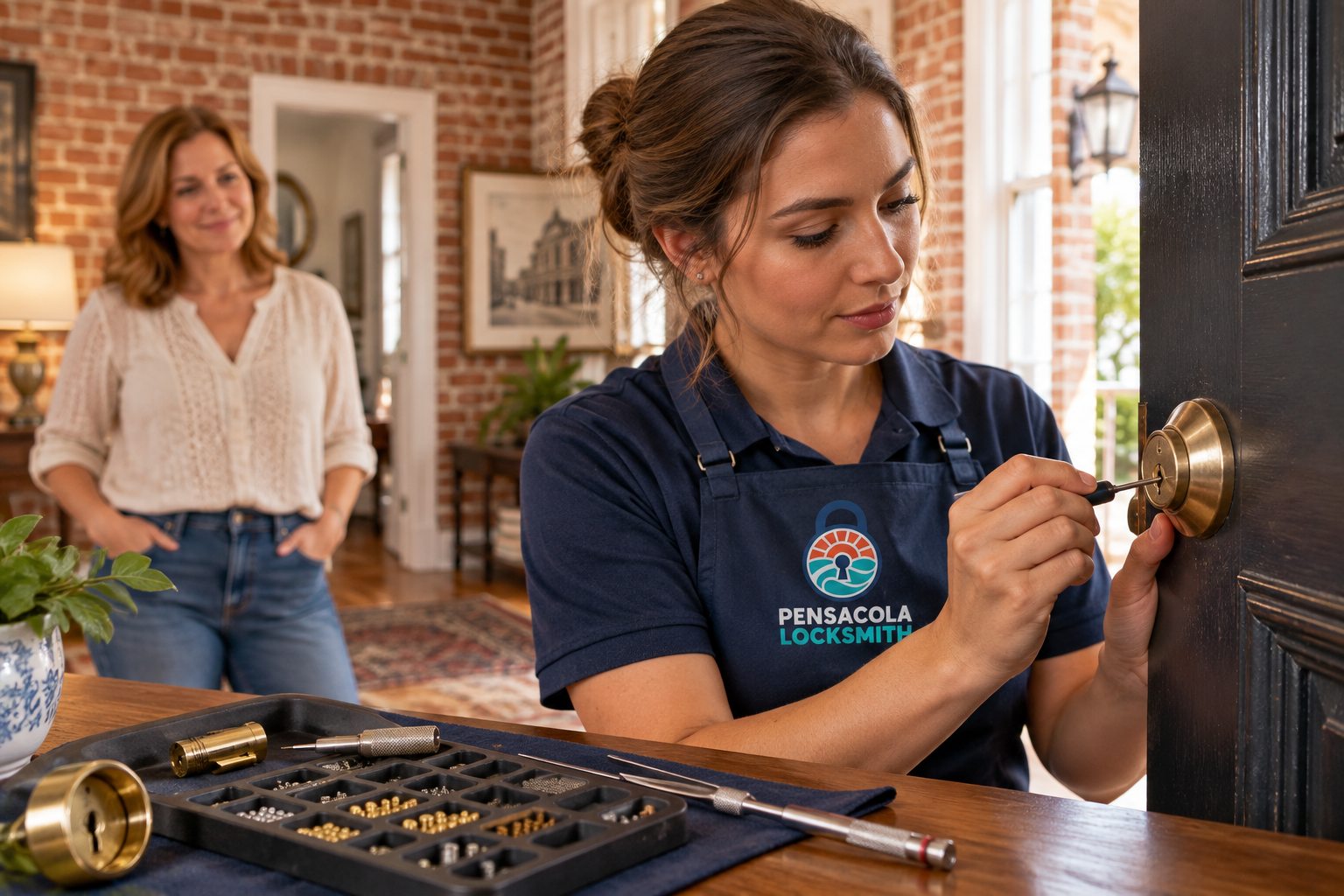
Outbuildings are where rural locksmith calls are most different from city ones. A workshop may hold power tools and equipment that are expensive to replace. A barn may hold feed, tack or a tractor. A storage building may simply hold family belongings that matter to nobody else. The doors on these buildings vary widely: hasps with padlocks, old mortise locks, deadbolts added later, sliding doors with a lock bar, or an overhead door with a simple latch. Each calls for a different approach, and the technician will look at the door first before deciding what is realistic.
A common situation is the lost key to an old padlock or a deadbolt that was installed by a previous owner. The key is gone, nobody remembers where the spare went, and the building has been closed for months. A locksmith can often open the lock without damaging the door, then fit a new cylinder or padlock and cut keys so that the building is secured again the same day. In some cases the lock is so worn or corroded that opening it nondestructively is not practical, and the honest answer is to remove and replace it.
For buildings that hold valuable equipment, it is worth talking through the choice of hardware. A heavier hasp, a shrouded padlock that resists cutting, or a deadbolt with a reinforced strike plate makes a real difference. None of this is about spending the most. It is about matching the hardware to what the building holds and how the door is built, because even the best lock is limited by a thin door or a loose frame.
- Hasps and padlocks, including shrouded styles that resist bolt cutters
- Deadbolts on wood or metal outbuilding doors
- Sliding and barn style door lock bars
- Replacing old mortise or surface mounted locks
Farm gates, chains and padlocks in humid weather
Gates are the first line of security on rural land, and they live outside in all weather. Gulf Coast humidity, summer rain and the occasional storm are hard on any padlock and chain. Steel bodies rust, brass can stain and seize, and cheap pin tumbler cylinders fill with grit and pollen until the key turns hard or not at all. If a gate padlock has become stiff, the right response is to clean and lubricate it with a suitable dry lubricant while it still works, rather than forcing the key until it snaps off in the lock.
When a padlock has already failed, there are a few options. If the key is lost, a locksmith can open the lock and often reuse it, or cut it off and replace it with a better-suited one. Choosing the replacement matters. A closed shackle padlock, a hardened chain with the right link size and a lock that is rated for weather exposure will all last longer than a general purpose hardware store lock. Some owners also choose to match several padlocks on the property to a single key so that one key opens the gate, the barn and the shop.
Matching locks to one key is called keying alike, and it is a practical answer to the ring of mismatched keys that builds up on a working property. The tradeoff is that one lost key then affects every lock in the set, so it is best used for locks that guard things of similar value. Your technician can explain which locks are good candidates and which are better left on their own keys.
Front doors and back doors on rural houses
The houses in and around Molino range from older farmhouses to newer builds, and the door hardware shows it. Older homes may have worn knobsets, loose strike plates and original deadbolts that have been rekeyed or replaced several times. Newer homes often have keyed entry sets, smart locks or a keypad deadbolt on the back door. In every case, a locksmith starts by looking at how well the door closes, whether the latch lines up with the strike plate and whether the frame itself is solid.
Many lockouts on rural homes happen at the back door, where someone stepped out to let the dog out or check on an animal and the door latched behind them. Those are usually straightforward. The technician confirms that you live there or have authority to enter, opens the door without damage where possible, and checks whether a small adjustment, such as lubricating the latch or tightening the strike plate, will stop it happening again. Asking for proof, such as an ID with the address or a utility bill, is a normal part of the process.
When a home has been bought, inherited or rented, the usual next step is to rekey every exterior lock so that earlier keys no longer work. This is far less expensive than replacing every lock and can be done in a single visit. It is a good first step on any property where the history of who held keys is unknown, and it is common after a change of tenants or after a long period when the house sat empty.
Lockouts when town is a long way off
A lockout in town is an annoyance. A lockout on a rural road or a long driveway can be a real problem, especially at night or in summer heat. If you are locked out of the house and your phone, keys and wallet are inside, you may have no way to call at all, so the first step is finding a neighbor or using a phone you can reach. Do not try to break a window or force a door yourself. That usually costs more to repair than the lockout would have cost to solve, and it can injure you.
Once you reach us, describe the lock and the door. Is it a standard knob, a deadbolt, a smart lock, a sliding glass door? Is anyone inside, such as a child, a pet or someone who may need help? If there is any urgent safety concern, such as a young child locked inside or a stove left on, say so right away and consider calling emergency services, since a locksmith is not a substitute for them. For ordinary lockouts, the technician will arrive, confirm authority to enter and open the lock with as little damage as possible.
Availability depends on where the technician is and what else is going on, so please call to confirm. Do not rely on any assumption about how quickly someone can reach a remote address. Honest planning is better than a promise, and a clear description of where you are makes every part of the process go more smoothly.
Vehicles at home, on farm roads and at work sites
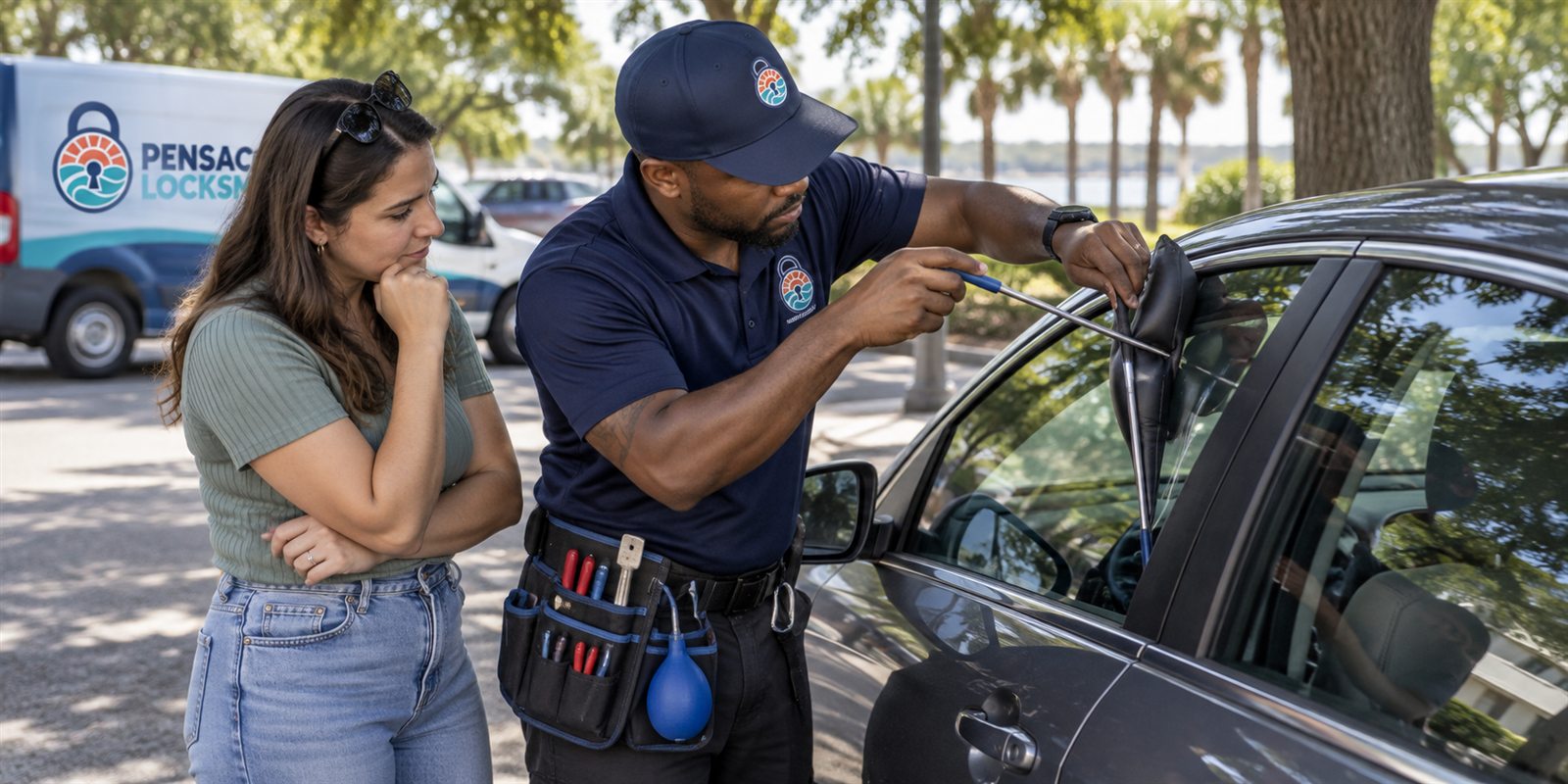
Rural residents rely on their vehicles more than most, and a lost or broken key is more than an inconvenience when the nearest alternative is a long drive. A mobile locksmith can open a locked car, truck or utility vehicle, cut a replacement key and, for many vehicles with transponder keys, program a new one on site. Which of these is possible depends on the vehicle category and the type of key it uses, and your technician will explain what applies to yours after asking a few questions about the vehicle.
As with homes, the locksmith checks ownership or authority before opening a vehicle or making a key. That usually means the registration or title and a matching photo ID. This protects you as much as anyone, because it means a stranger cannot walk up to your truck and have a key made. If the vehicle belongs to an employer or a family member, bring whatever shows you are allowed to have access.
Work trucks and trailers often have toolbox locks, hitch locks and cargo door locks in addition to the ignition and door locks. Those can be replaced or rekeyed too, and many owners choose to key them all to a single vehicle key so there is less to carry. If a trailer has been sitting by the barn for a long time, its locks may have seized from rust, and replacement is usually more reliable than trying to revive them.
Storm season and keeping a rural property secured
Hurricane season shapes how people in this part of Florida think about their property. Before a storm, owners often move equipment into sheds and barns, lock gates and secure doors. After a storm, they return to find swollen doors that will not latch, bent hasps, fallen limbs across gates or locks packed with mud and water. A lock that has been soaked and then dried often works stiffly. Cleaning it and applying a proper lubricant can bring it back, but a lock that has been underwater or badly corroded is better replaced.
Doors and frames can shift as wood swells and dries. If a deadbolt no longer lines up with its strike plate after a storm, the fix is sometimes as simple as adjusting the plate or the hinges, and a locksmith can look at that during a visit. Forcing a bolt that does not line up wears the lock out quickly and can leave the door only half secured, which is worse than knowing it needs attention.
It is sensible to keep a spare key for each important lock somewhere safe and away from the property, such as with a trusted relative, and to know which key opens what. A simple tag system on a key ring helps in an emergency. If you evacuate and return to find a lock damaged, call to confirm availability, since many people may need help at the same time after a major storm, and patience is part of the process.
How to prepare before you call
A short call goes better when you have a few things ready. Know the address, or at least precise directions. Know what is locked: house, outbuilding, gate, vehicle or a safe. Know what you need, such as getting in, a new key, a rekey or a replacement lock. If there is a brand name on the lock, or a number stamped on the key, mention it. Photos of the door or lock, if you can send them, help the person on the phone give a realistic idea of what the work involves.
Also gather proof that you have the right to authorize the work. For a home, that might be an ID that shows the address, a lease, a utility bill or a closing document. For a vehicle, the registration or title and your ID. For a business building or a shop, something that shows you own it or manage it. A technician will ask for this before opening anything, and having it ready keeps the visit short.
Finally, be clear about your expectations on cost. Quotes are given by phone based on what you describe. If the job turns out to be complicated, a technician visits and the service call charge is explained before dispatch, so there are no surprises at the door. Ask questions, ask what the options are, and decide what makes sense for your property and your situation.
Common questions
Can you come out to a long private driveway or a gated property in Molino?
Yes, a mobile locksmith can work at gated and long-driveway properties, but it helps to give clear directions, landmarks and gate details when you call. Tell us how the gate opens and whether anyone will be there to let the technician in. Please call to confirm availability for your location.
Can a locksmith open a barn or workshop with a lost key?
In many cases yes. The technician looks at the lock and door first. Where the lock can be opened without damage, it often is, and then a new cylinder, padlock or key can be fitted. Very worn or rusted locks sometimes need to be removed and replaced instead.
Do I need to prove I own the property?
Yes. Before opening, rekeying or making keys, the locksmith checks ownership or authority. For a home, an ID showing the address, a lease or a utility bill is usually enough. For a vehicle, bring the registration or title and your ID.
Can several padlocks on my property use the same key?
Yes, locks can be keyed alike so one key opens the gate, barn and shop. The tradeoff is that losing that key affects all of them, so it works best for locks that protect things of similar value. Your technician can suggest which ones to group.
How much will the visit cost?
Quotes are given by phone after you describe the situation. If the job is complicated, a technician visits first and the service call charge is explained before dispatch, so you know what to expect before any work starts.